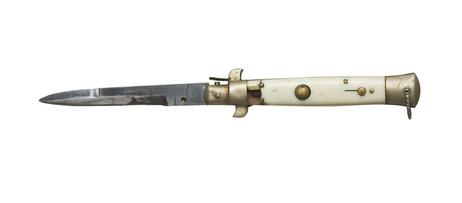
The classic switchblade of fiction most people picture in their minds is an Italian stiletto. That’s not a model per se, it’s more of a style, and it looks like this:
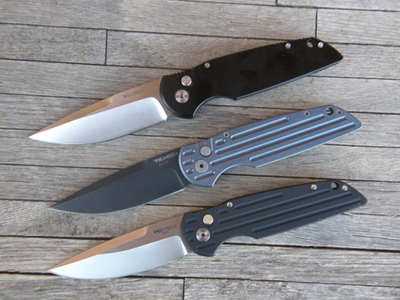
As I’ve written before, that’s an old school style that’s fallen by the wayside. New switchblades use modern technology and are so different that they’re called “automatic knives.” They look something like these Protech models:
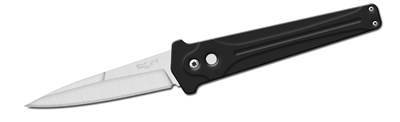
But that doesn’t mean Italian stilettos are off-limits for modern day settings in fiction. Even though they’ve dropped out of popularity, the style has evolved over the decades. A character with a brand new Italian stiletto might carry something that looks like this:

That’s a Bear OPS AC-300-ALBK-S Stiletto. Writerfolk, if your character needs old school flair in a modern package, this is a great pick. I dare say you could break from convention and write it as a “switchblade,” even though “automatic knife” or “automatic” would work just as well. Just be sure it’s legal for the character to carry if that’s important to the story. Law enforcement, military and criminal characters could use this knife without another thought. Your Joe or Jane Citizen characters would require some more legal research.
Specs
- 3-1/4″ blade
- 7-5/8″ open length
- 4-1/2″ closed length
- Weight: 4.3 oz.
Despite the differences in design and materials, one thing all switchblades and automatic knives is the button on the handle. The blade pops open when it’s pressed. That button (sometimes also a switch or lever) is a defining characteristic that makes a knife a switchblade/automatic both legally and technically.
First switchblade pic via Shutterstock, Protech knives pic via BLADE magazine, Bear OPS pic via Bear & Son Cutlery
Get the Book
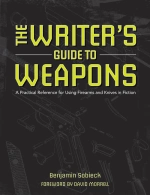 The Writer’s Guide to Weapons: A Practical Reference for Using Firearms and Knives in Fiction (Writer’s Digest Books) comes with everything but the ammo. Pick up a print or digital copy from these fine retailers:
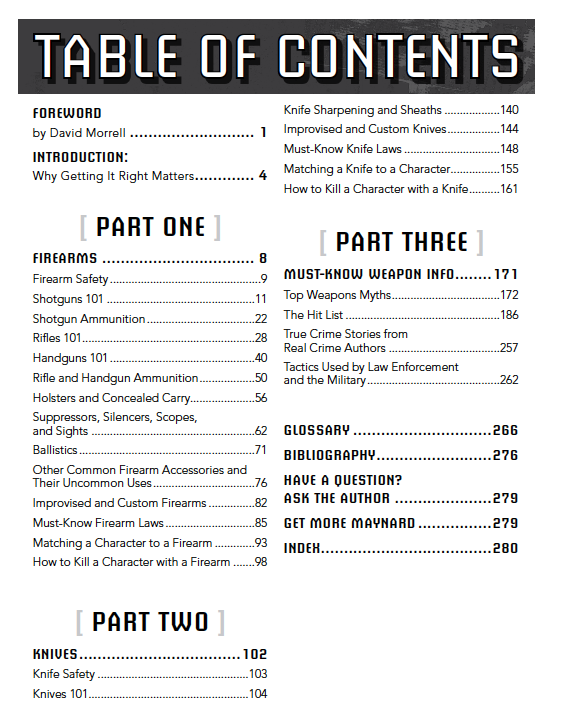



 The Writer's Guide to Weapons